

.jpg)


How does the gearbox on an Iveco Daily work?
The gearbox is one of the most heavily used components in a commercial vehicle such as the Iveco Daily. Whether transporting heavy loads, driving in urban areas or travelling long distances, the transmission plays a crucial role. It adapts the engine’s power to the vehicle’s speed, whilst optimising fuel efficiency and mechanical durability.
Position of the gearbox on the Iveco Daily
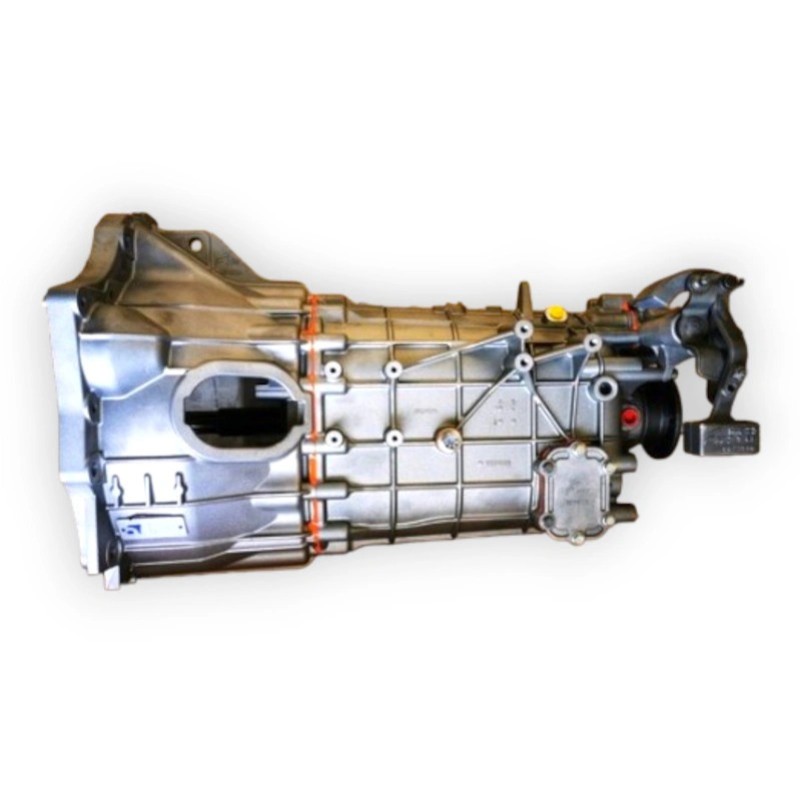
On the Iveco Daily, the gearbox is positioned longitudinally between the engine and the drive shaft. This configuration is typical of rear-wheel-drive or twin-axle vehicles.
It is mounted directly to the engine sump and rests on anti-vibration mounts, which ensure proper alignment whilst limiting the transmission of vibrations to the bodywork. This central position ensures excellent weight distribution and facilitates access during maintenance operations.
Mechanical components interacting with the gearbox
The gearbox does not operate in isolation. It forms an integral part of a complex mechanical system involving:
- The engine: which provides the initial power. The flywheel: which regulates inertia and transmits rotation to the clutch.
- The clutch: which temporarily disconnects the engine from the gearbox to change gear.
- The drive shaft: which transmits power to the rear axle.
- The differential and wheel shafts: which distribute engine torque to the drive wheels.
Each component must work in perfect harmony with the gearbox to ensure optimum performance.
Technical operation of a gearbox
⚙️ Manual gearbox
A manual gearbox consists of several shafts (primary, secondary and sometimes intermediate) and a set of gears. When the driver moves the gear lever, a mechanical fork moves a synchroniser which locks a gear onto the output shaft. The selected gear determines the rotational speed transmitted to the wheels.
Changing gears requires the engine to be temporarily disconnected, which is made possible by the action of the clutch.
⚙️ Automatic gearbox or Hi-Matic
In a conventional automatic gearbox, a torque converter replaces the clutch. Gear changes are managed hydraulically, via planetary gear sets and multi-disc clutches. The on-board electronics (TCU) analyse speed, load and gradient to select the ideal gear.
The Hi-Matic gearbox, specific to certain Iveco Daily models, is an 8-speed automatic gearbox developed in collaboration with ZF. It offers ultra-fast gear changes, a smooth ride, and an excellent balance between comfort and performance.
The essential components of a gearbox
Bearings
They ensure the smooth rotation of the internal shafts. Wear and tear on them leads to vibrations, play or metallic noises. They must be inspected and replaced during a gearbox service.
Synchroniser kit (or synchro kit)
This allows the rotational speeds of the shafts to be matched for smooth gear changes. A worn kit causes creaking noises or difficulty engaging certain gears, particularly when the engine is cold.
SPO seals and sump seals
Essential for ensuring the gearbox remains sealed. They prevent oil leaks, which can lead to premature wear if the oil level drops too low.
Clutch
Consisting of a clutch disc, a pressure plate and a release bearing, it is engaged every time you change gear. It shows signs of wear at around 150,000 to 200,000 km: slipping, vibrations or difficulty changing gears.
⚙️ Flywheel: dual-mass or single-mass
- The dual-mass flywheel is more complex, absorbs vibrations better and protects the gearbox and clutch. It is often fitted to recent Daily models or Hi-Matic vehicles.
- The single-mass flywheel, which is simpler, is robust but transmits more vibrations. It can be fitted as a replacement for a dual-mass flywheel using a conversion kit.
Focus on internal components: bearings, selector fork and gear cables
The Iveco Daily’s gearbox comprises numerous internal components that ensure reliable gear changes. Some of these, often overlooked, are nevertheless essential to its proper functioning.
? Gearbox bearings
Each drive shaft (primary, secondary or intermediate) rests on bearings that allow smooth rotation at high speed. These bearings are generally needle, tapered or ball bearings, and are housed in the gearbox casing.
If worn, they can cause:
- Rumbling or grinding noises when accelerating,
- Excessive play between the gears,
- Premature wear of the gears.
They are usually replaced during a full gearbox overhaul, particularly after 200,000 km or in the event of mechanical failure.
?️ The selector fork
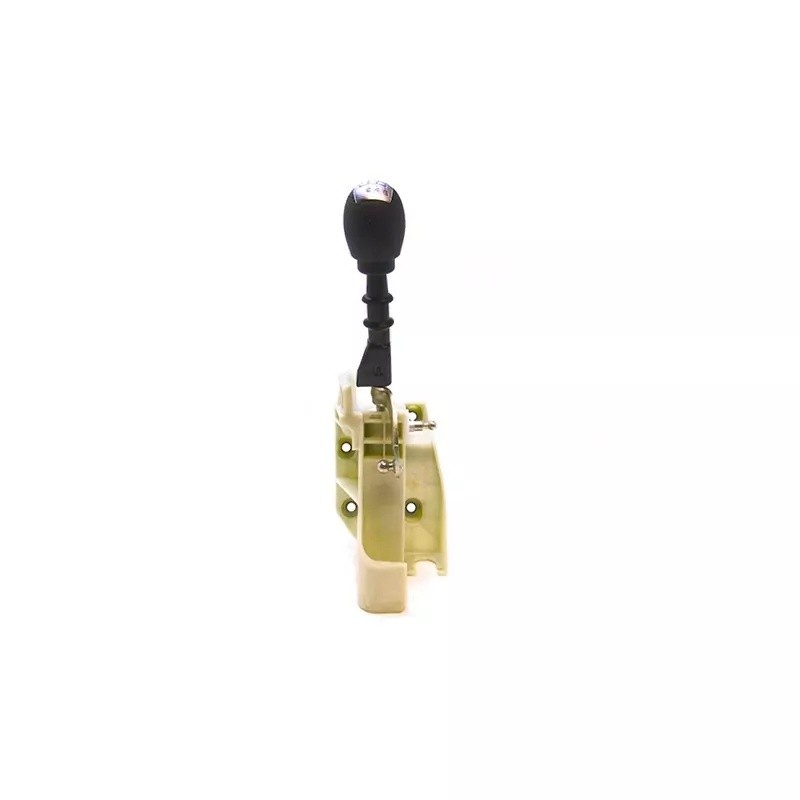
The selector fork is a moving component used to engage or disengage the gear teeth inside the gearbox. It is directly connected to the gear lever, either mechanically or via cables.
Each fork is designed for one or two gears. It slides along a rail and pushes or pulls the synchroniser to engage the desired gear.
A fault with the selector fork can cause:
- Difficulty changing certain gears (often 2nd or 3rd),
- Gears slipping out of place after engagement,
- Premature wear of the synchroniser.
This component is usually made of steel or aluminium alloy, and is sometimes made of reinforced plastic in modern gearboxes.
? Gearshift cables
On modern Iveco Daily models, particularly since Euro 4, the gearboxes are controlled by cables from the gear lever. These cables replace the old rigid linkage, offering smoother gear changes, greater precision, and reduced vibrations transmitted to the cab.
However, the control cables can wear out, become slack or even snap. Typical symptoms:
- Difficulty finding neutral,
- The lever becoming stiff or imprecise,
- Temporary jamming in reverse or first gear.
Replacing these cables is relatively quick and easy, but must be carried out using high-quality spare parts for the Iveco Daily to ensure smooth gear changes.
Maintenance and servicing of an Iveco Daily gearbox
To ensure its longevity, a few simple rules must be followed:
- Oil change every 60,000 to 80,000 km (more frequently in heavy-duty use).
- Check seals and bearings at every major service.
- Electronic diagnostics for automatic and Hi-Matic gearboxes.
- Replace the clutch kit at the first signs of wear.
- Check for gear-shifting noises, often a sign of a worn synchroniser.
Your Iveco Daily’s gearbox is much more than just a transmission mechanism. It determines the smoothness, robustness and comfort of your vehicle on a daily basis. Choosing the right parts, planning for replacements and following the recommended maintenance schedule ensures your Daily will provide many years of reliable service.