

.jpg)


What is the recommended tyre pressure for an Iveco Daily?
Over-inflated or under-inflated tyres can pose a real danger, and tyre pressure has a significant impact on the environment. That is why we urge you to check the tyres on your Iveco Daily regularly to ensure they are correctly inflated.
To carry out any necessary repairs on your vehicle, find the Iveco Daily part that suits your needs on our website.
What is the correct tyre pressure for an Iveco Daily?
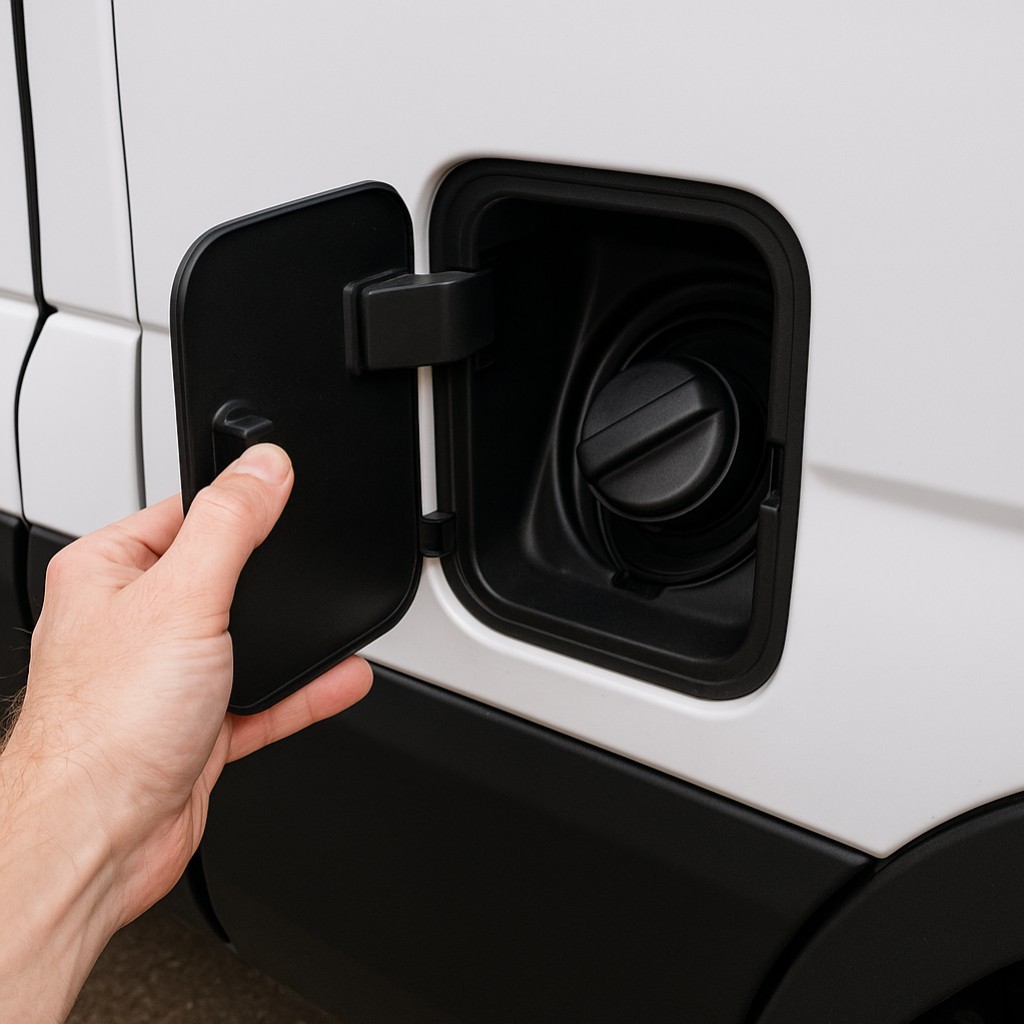
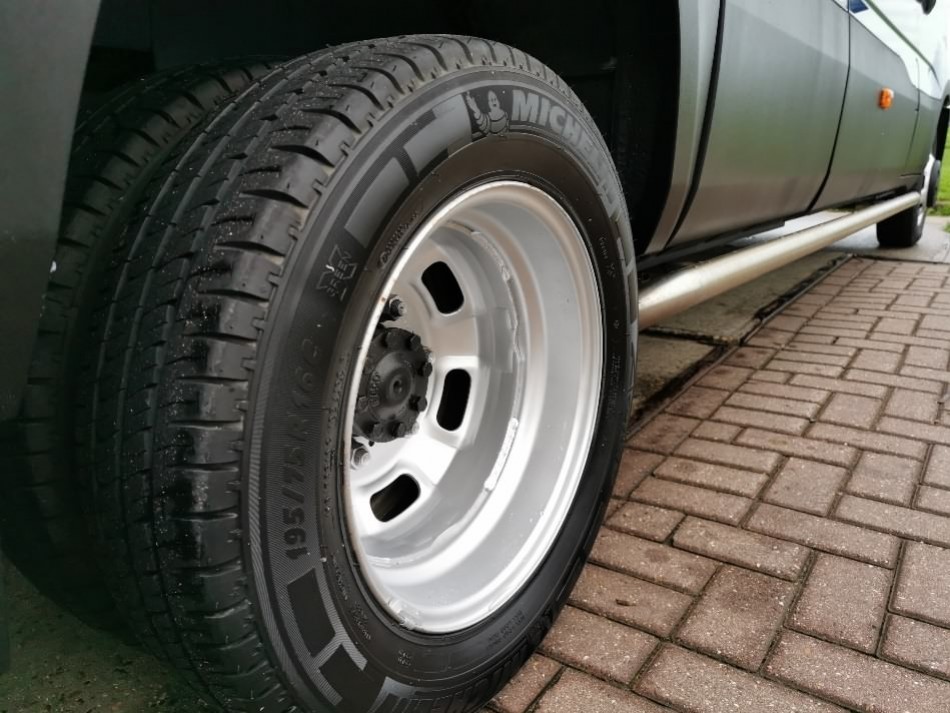
To find the manufacturer’s recommendation, refer to the identification label located on the driver’s side door pillar. On this label, the pressure is indicated in ‘bars’. You will also find this information on the fuel filler flap and in the owner’s manual. Be careful! The figure shown on the sidewall of the tyres is the maximum pressure they can withstand, not the recommended tyre pressure.
To determine the recommended tyre pressure, you must first consider whether your vehicle is loaded or not. Very cold weather also has an impact. In winter, it is advisable to add 0.2 bar.
The following details should provide you with important information:
-
What is the model of your Iveco Daily?
Online, you will find that the tyre pressure for an Iveco Daily is 3.5 bar at the front and 4 bar at the rear. Please note! There is no universal pressure. Refer to your vehicle’s year of manufacture and the size of the rims.
-
Hot or cold tyre pressure?
Check tyre pressure when the tyres are cold, i.e. when they have travelled less than five kilometres. If you have no choice but to check tyre pressure when the tyres are hot, subtract 0.3 bar from the manufacturer’s recommended pressure. However, this must be checked and readjusted once the tyres have cooled down.
-
Loaded or unloaded vehicle?
To find out the recommended tyre pressure for your Iveco Daily, you must first know whether your vehicle is loaded or not. If you wish to inflate your tyres for your usual journeys and your van is not overloaded, the pressure will be lower than for a holiday journey involving long journeys and a full boot. You will need to adjust these recommendations during the winter months; it is recommended to add an extra 0.2 bar of pressure.
When should you check the tyre pressure on your Iveco Daily?
For a vehicle of its size, the Iveco Daily is known for its speed. Checking tyre pressure is therefore an essential step. Depending on how you use the vehicle and the load you carry, it is recommended that you check tyre pressure once or twice a month. Don’t hesitate to do so before every long journey as well.
Is my Iveco Daily tyre flat or punctured?
How can you tell if your tyre is simply low on air or if it has a puncture? There are some tell-tale signs.
After inflating your tyres, if one of them loses pressure more quickly than the others, that’s a sign. Do remain vigilant, though. You could have two punctures at the same time. It does happen.
If a tyre is punctured, you will feel, whilst driving, an imbalance causing the vehicle to lean to one of the four sides. Please note that an Iveco Daily air suspension system may alter the sensation of imbalance.
In the event of a puncture, you will feel vibrations through the steering wheel.
On the road, you’ll notice a loss of handling. As your Iveco Daily is unbalanced, the steering pulls to one side.
There are two types of punctures. So-called ‘rapid’ punctures, often caused by a significant cut in the tyre sidewall. And then there are ‘slow’ punctures, which are harder to detect and therefore more dangerous.
Here are some simple, effective and inexpensive techniques to tell the difference between a punctured tyre and a flat tyre.
- Re-inflate all your tyres. Drive carefully for a few days. Then check the tyre pressure again a week later. If the tyre is flat again, it is probably a puncture.
- The other technique, which is even quicker, requires soap and water. Inflate the tyre in question. Coat it with soapy water. Watch to see if small bubbles form on the tread. If bubbles appear, there are holes.
A quick reminder to finish: when checking the pressure of your Iveco Daily tyres, don’t forget to top up the spare wheel!
What are the risks of driving with under-inflated Iveco Daily tyres?
Tyre pressure is a crucial factor in road safety. Tyres provide grip on the road and are a key factor in braking distance. Consequently, an under-inflated tyre is dangerous. The risks involved—which are numerous—should not be underestimated.
Driving with a flat tyre increases the risk of aquaplaning and reduces grip when cornering. This causes premature tyre wear, which can lead to a blowout. With increased braking distances, there is a risk of collisions or accidents that can be serious and costly.
As you can see, an over-inflated tyre is just as dangerous. It makes the tyres stiff. They handle the road less effectively and wear out more quickly.
The consequences of incorrect tyre pressure on an Iveco Daily also have environmental implications. A vehicle with under-inflated tyres consumes more fuel. This leads to increased emissions of fine particles, which are harmful to air quality.
So, to avoid accidents and inconvenience, remember to check your tyre pressure every month. Take the time to do this check before setting off on long journeys or when you’re carrying a heavy load.